

This month, following last month’s discussion of hydrangeas in my garden, how other plants in my garden coped with the extreme heat and drought. I will major on the parts of the garden that I do not water.
You know the summer weather is extreme when the Bindweed dies off and the Ground Elder leaves vanish in July. In the extreme relentless dry heat, the Hardy Geraniums wilted, and any flowers quickly went to seed. As soon as we had more normal temperatures and some rain in September they put out neat new mounds of leaves, as if I had given the Hampton hack! (But no flowers). The roses did flower beautifully in June and early July, with gorgeous scent, as did the honeysuckles. I should particularly mention Lonicera periclymenum ‘Graham Thomas’ which has flowered and been growing strongly throughout the garden – even now in Autumn.
Here, flowering with Lonicera periclymenum ‘Belgica’ by the courtyard: -

Their scent in the evening air was wonderful through the heatwaves, especially combined with the Philadelphus. But by mid-July the roses were all over. They left an impressive number of hips this year, but many have not reflowered. The Lonicera periclymenum ‘Belgica’ flowered early and created enormous numbers of colourful berries in place of their flowers. Here a mingling of the honeysuckle berries and Rosa Glauca hips: -
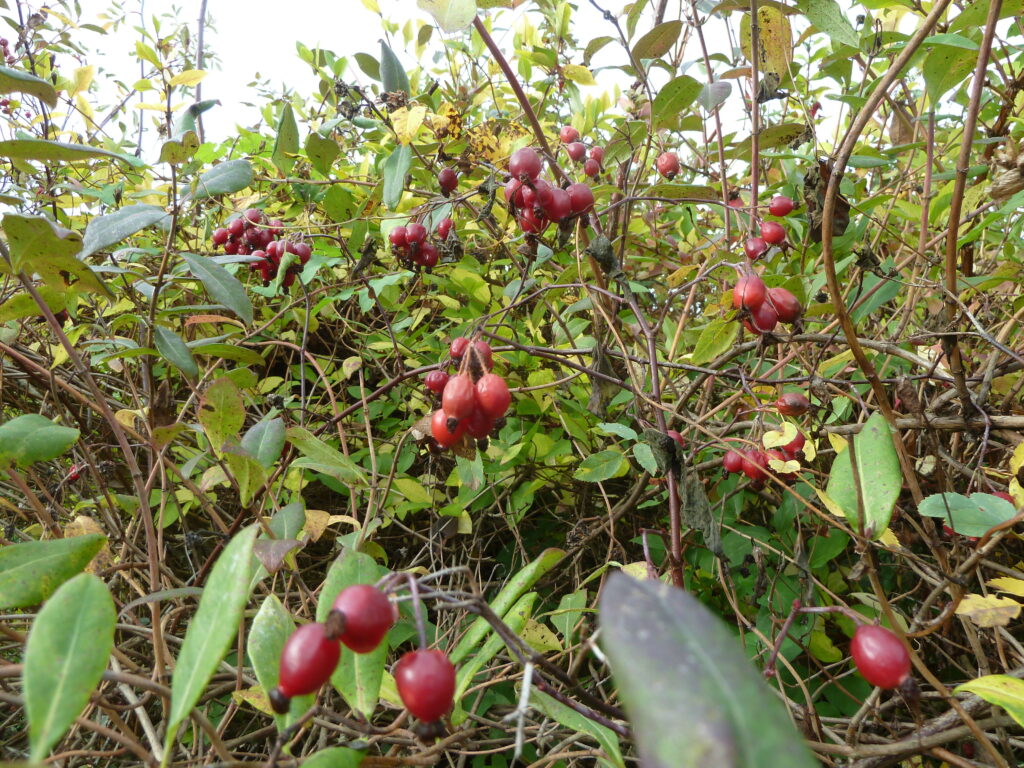
In general, most plants went into protection-mode – growing shorter than usual, flowering earlier and running to seed quickly. Most of the Honeysuckles shed some leaves in the heat, (rather like the trees), but had plenty remaining throughout. Examples of plants that were shorter in stature, quick to flower and run to seed were: - the Cephalaria gigantea, over and done with by early July; Teasels (Dipsacus fullonum); Verbascum; Foxgloves; the patch of Vipers Bugloss in the grass, which should still have blue flowers on in October, quickly ran to seed in early August whilst the Red Valerian (Centranthus rubra) carried on flowering all summer: -
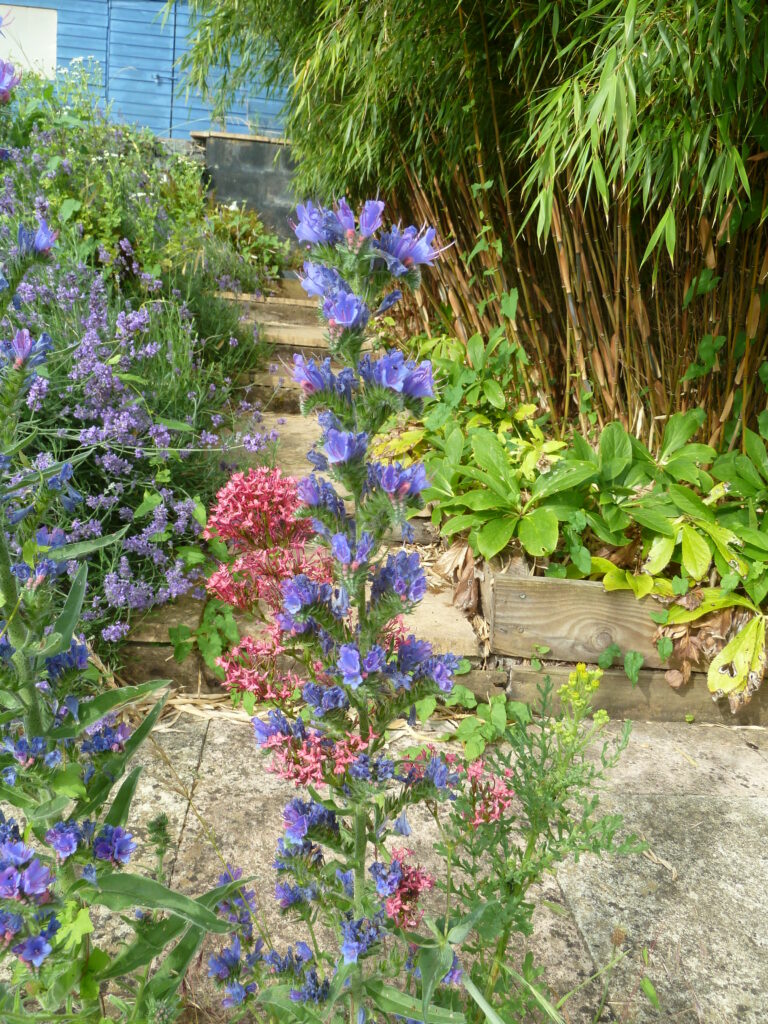
You would expect Lavenders to cope, but their flowers seemed to go over earlier than usual. The Mexican Fleabane (Erigeron karvinskianus) in the front garden has flowered somewhat all summer, but I didn’t manage to gather seed from it as they dropped so quickly, until October when they are beginning to act more normally in their flowering. The Perovskia ‘Blue Spire’ (Russian Sage) only really started flowering at the end of September, looking lovely through October. Other plants I would say “coped” rather than thrived were Verbena Bonariensis; Wild Strawberry (Fragaria vesca) which fruited early, stopped in the summer heat, and has restarted in later September. Native ferns such as Dryopteris filix-mas, and Harts Tongue Fern (Asplenium scolopendrium) also coped, though their foliage went very tatty early. Surprising to me, as I associate them with wetter ground, the Dogwoods (Cornus) all coped, keeping leaves, putting out flowers and berries as normal. Other plants have started flowering again in late September – but not many plants performed as expected through the summer. I mentioned the Santolina Chamaecyparissus (Cotton Lavender) doing well last month, but there were very few in the unwatered, poor chalk soil here that did. A star plant here this year was the Gaura – now called Oenothera lindheimeri ‘Whirling Butterflies’ - which has flowered all summer and well into October.

This shot also shows the Purple Toadflax (Linaria Purpurea), another star plant flowering all summer, and Verbascum Olympicum seed spike.
Golden Oregano (Origanum vulgare ‘Aureum) and Pot Marjoram (Origanum onites) both grew well – as did the Sweet Basil in the greenhouse. I have been harvesting these for culinary purposes all summer long, as well as the Lemon Balm and Lime Balm. All these Mediterranean herbs did well and produced very flavourful leaves (unlike in wetter cooler summers). My Scabiosa columbaria subsp ocheroeleuca also performed as usual. As did the Cardoon (Cynara cardunculus), and Globe Thistle (Echinops Ritro): -

The Salvias did extremely well in the heat – I particularly noticed Salvia Verticillata, Salvia microphylla ‘Royal Bumble: -
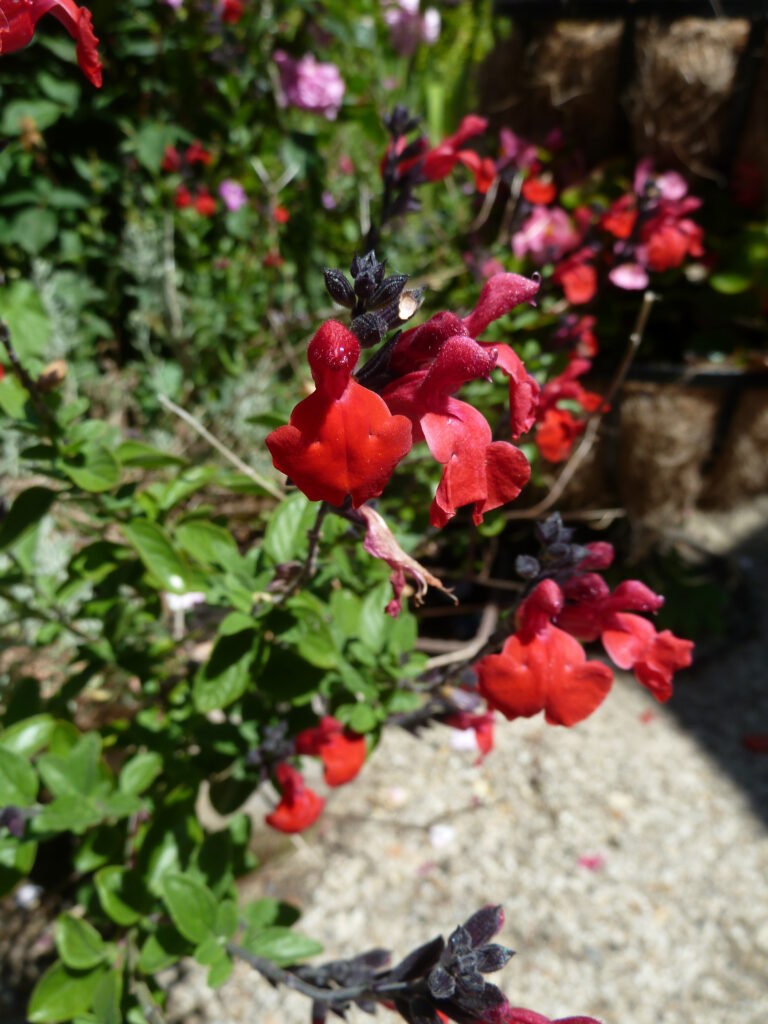
and Salvia microphylla ‘Cerro Potosi’ flowering well all summer, whilst my Salvia nemorosa ‘Caradonna’ seemed to die – though according to Matthew Wilson his went into summer dormancy in Rutland, so perhaps mine did too (fingers crossed). Not unexpectedly, the Yuccas have done very well this summer. I planted a 4-leaf stick (looking like a pencil) of Yucca Filamentosa ‘Colour Guard’ in a pot by the front door, and it has thrived in baking sun/dry wind, and neglect: -
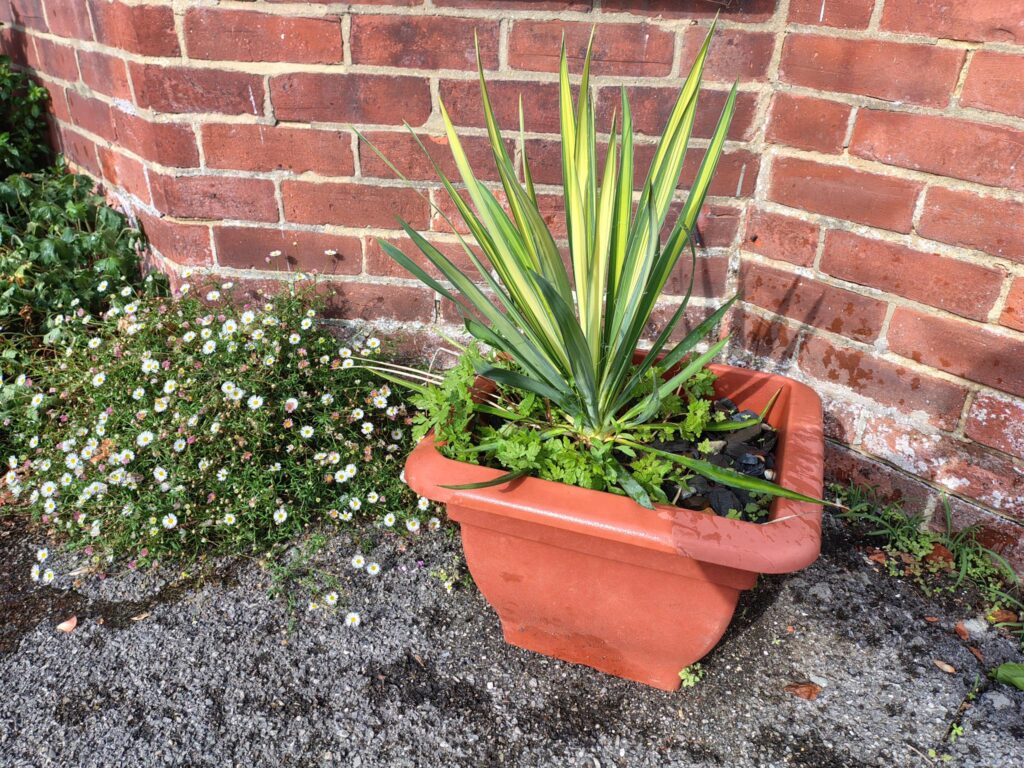
Look how much it grew! I left the Herb Robert that has recently started shooting up in the pot after the late September rains to show you another successful plant in the garden(!) You can also see the Mexican Fleabane (Erigeron karvinskianus) self-seeded in the cracks at the base of the house beside it.
I mention the “weed” Herb Robert as, having last month dismissed idea of the entire garden being given over to sparse gravel gardens, like Derek Jarman’s Dungeoness Garden, or Beth Chatto’s Gravel Garden as a way of future-proofing the garden against the climate, perhaps I should look to John Little’s experimenting with planting in rubble/waste/sand with pioneering plants only. I expect HPS groups in East Anglia are very familiar with John Little’s experimental garden in Essex. On a south-facing slope with a mature shelter belt to protect from the prevailing wind, he set out to use recycled waste aggregates as growing mediums for native coloniser plants. He has grown into sand, crushed bricks, and rubble. Mostly by direct sowing seeds. Whilst some pioneer plants grow widely (e.g. buddleia and dandelions) some are more specific to my chalk habitat (Vipers Bugloss or Cowslips for example). Many of the plants that I have mentioned doing ok in my garden this year are self-sown offspring of mother plants – the Mexican Fleabane; Alpine Strawberry; Oxeye Daisy; Verbascum; Teasel; Foxglove; Vipers Bugloss; Pot Marjoram; Valerian; Sorrel. I also have many self-sown Scabiosa columbaria subsp ocheroeleuca and Verbena Bonariensis plants.
On the more decorative side, John Little also grows poppies especially Eschscholzia Californica and Field Poppies; scabious; salvias; verbenas; woad; tree lupins; verbascums and thistles. The “label” for this type of gardening is horticultural ecology, where equal emphasis is placed on biodiversity and aesthetics. John is trying to create as many different habitats as possible. For example, rubble-filled gabions for invertebrates, amphibians, and reptiles; dead hedges; deadwood; bee posts etc.
So, like the maquis habitat I enthused about in Crete to you many years ago, with endemic plants adapted to the poor harsh habitat, (Like marjoram/oregano/rosemary), there are many pioneer species that will seed themselves into almost ANY substrate and grow quite happily. Here’s a curated patch of the marjoram family up near our house, with Golden Oregano, Greek Oregano and Pot Marjoram making a tapestry, and overwhelming a baby yucca: -

My front garden of cracked concrete is awash with self-sown Erigeron karvinskianus; White Allium; Geranium endressii; Festeuca Glauca; Campanula portenschlagiana. As you know, Aspleniums self-seed into the cracked pointing along the side of the house: -
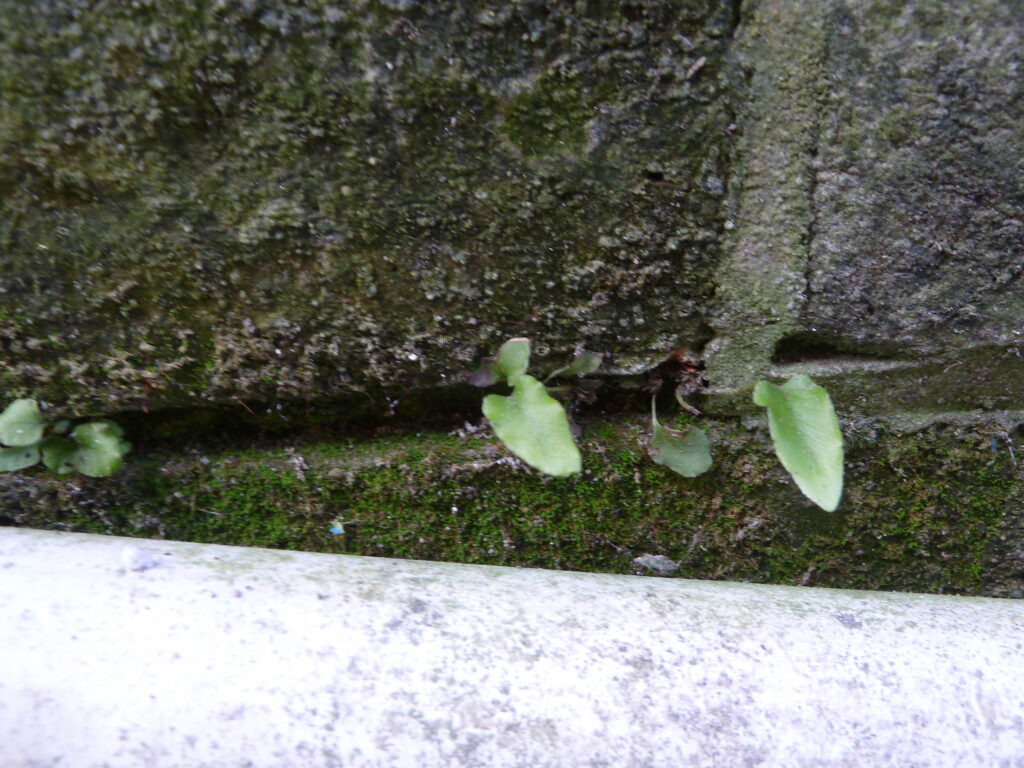

and Valerian and Purple Toadflax move round the garden by themselves, as do the Teasels; Verbascum; Foxgloves; Cowslips. Other prolific self-seeders into my paths are Blue Flax, Alchemilla mollis; Violets; Opium Poppies: -

Much like the illogicality of removing all the fallen leaves from under plants and shrubs, cutting down, and removing herbaceous perennial top growth AND THEN mulching with bought in mulch thickly round them, why do I try and remove all the plants that WANT to grow in my garden to plant others that do not.
However, I must remember that like inspiring photos of wildflower meadows, most photos of this sort of self-sown pioneer/native flower garden are taken late May/June when it is awash with ox-eye daisies and poppies and looks colourful and comparatively lush. But the reason we started tinkering genetically with wildflowers was because we wanted bigger flowers, longer flowering seasons. As we know, wildflower meadows run to seed during July and can look “meh” in August and September whilst we are waiting for the seed pods to ripen and fall. Again, not really the look I am wanting for the whole garden.
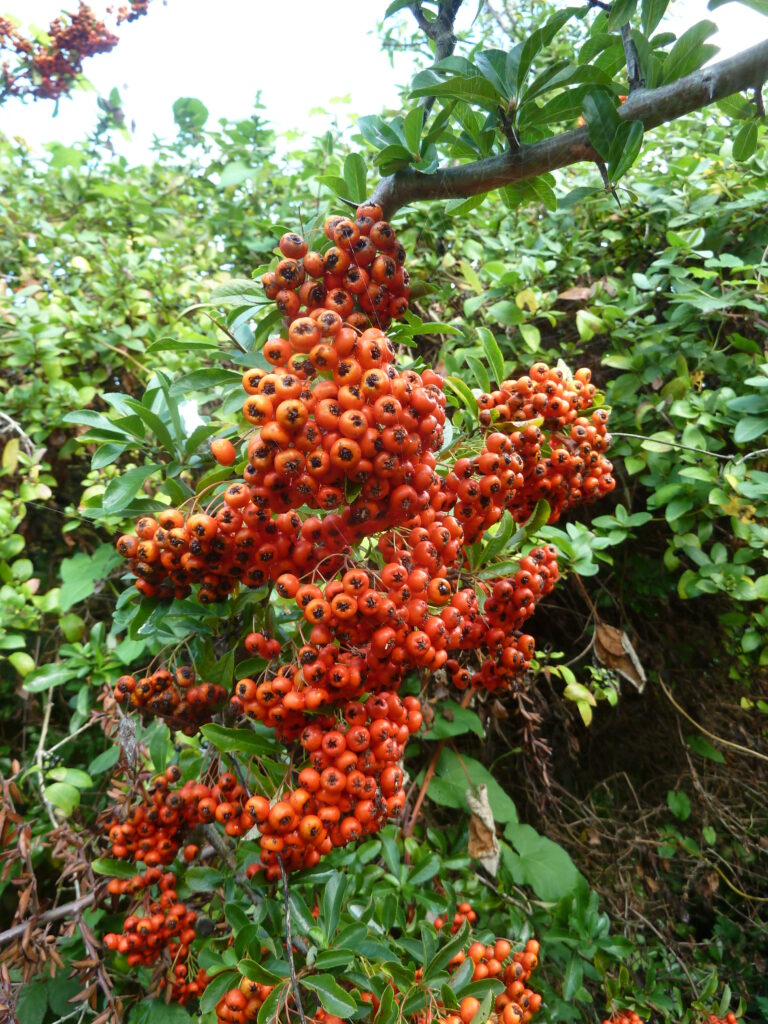
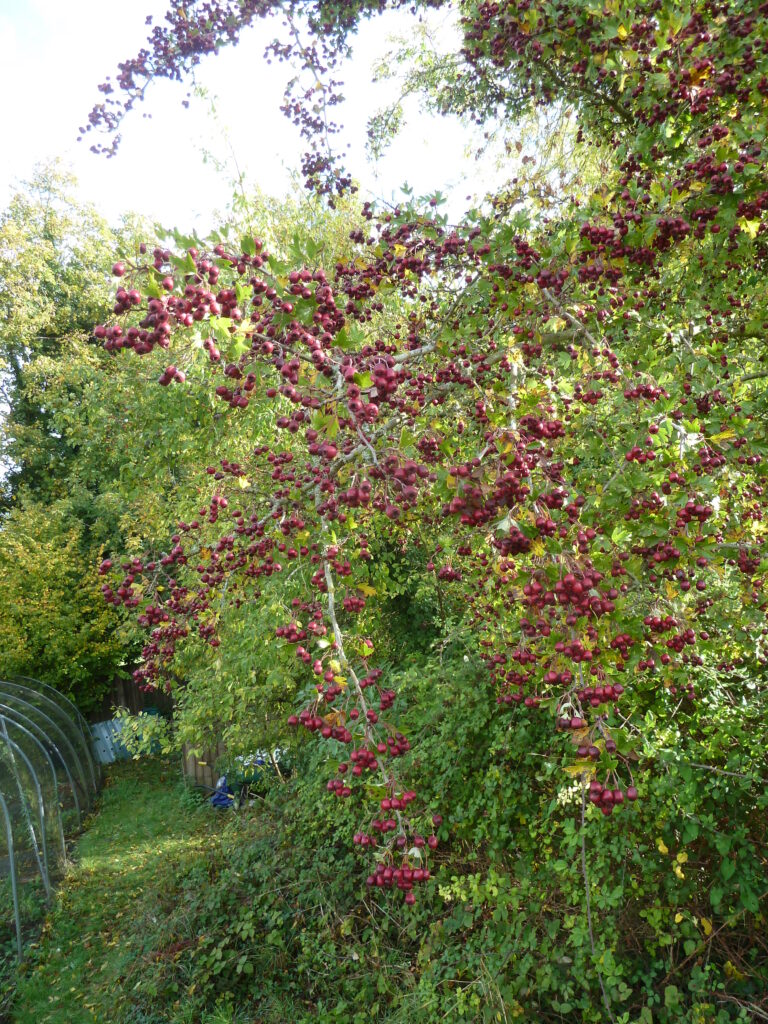
In fact, if I look at the “planted” plants that did well this year in my unwatered garden, they too have small leaves and small flowers. Whilst the Gaura and the Salvia microphyllas ‘Royal Bumble’/’Cerro Potosi’ DID flower all summer their small flowers are not impactful from any distance at all. The hips on the roses and the berries on the Pyracantha and Hawthorn have more visual impact from a distance.
Rosa canina hips: -

NB Another plant that coped well with the drought and heat was the Lonicera nitida hedge this Rosa canina is growing through.
Pyracantha berries: -
Hawthorn berries were plentiful and very early to form this year: -
Next month, how my Vegetable and Fruit garden coped with the weather this summer, and some more thoughts about how I might adapt my garden to the climate.